
No Website, No Problem!
Use one of these online platforms to house your portfolio

Apologies for the brief hiatus, dearest Substack readers, but I’m back! It’s mid-June already — what were your goals for the first six months of 2026? Are you hitting them or do you need to evaluate and adjust?
Please drop me a note in the comments to let me know how your year is going so far and what topics you’d like to see covered here!
Today I want to give you some options of free online platforms where you can upload your published work without the cost or hassle of building a website. Especially when you’re just starting out, it can feel impossible to shell out a bunch of cash for someone to build you a website, but there are plenty of free options out there to use instead.
One thing I’d recommend as someone who has lost evidence of my published stories when publications have folded or updated and removed stories is that whenever you have something published, you use the print function on your computer to save a PDF copy of your work. That way you always have a copy.
As always, thanks for being a supporter of my work, I really appreciate all of you! I wouldn’t be able to publish this Substack newsletter without your support. You can subscribe for $5 per month, a discounted rate of $55 per year, or simply Buy Me A Coffee. Thanks for being here! I’m so grateful to you.
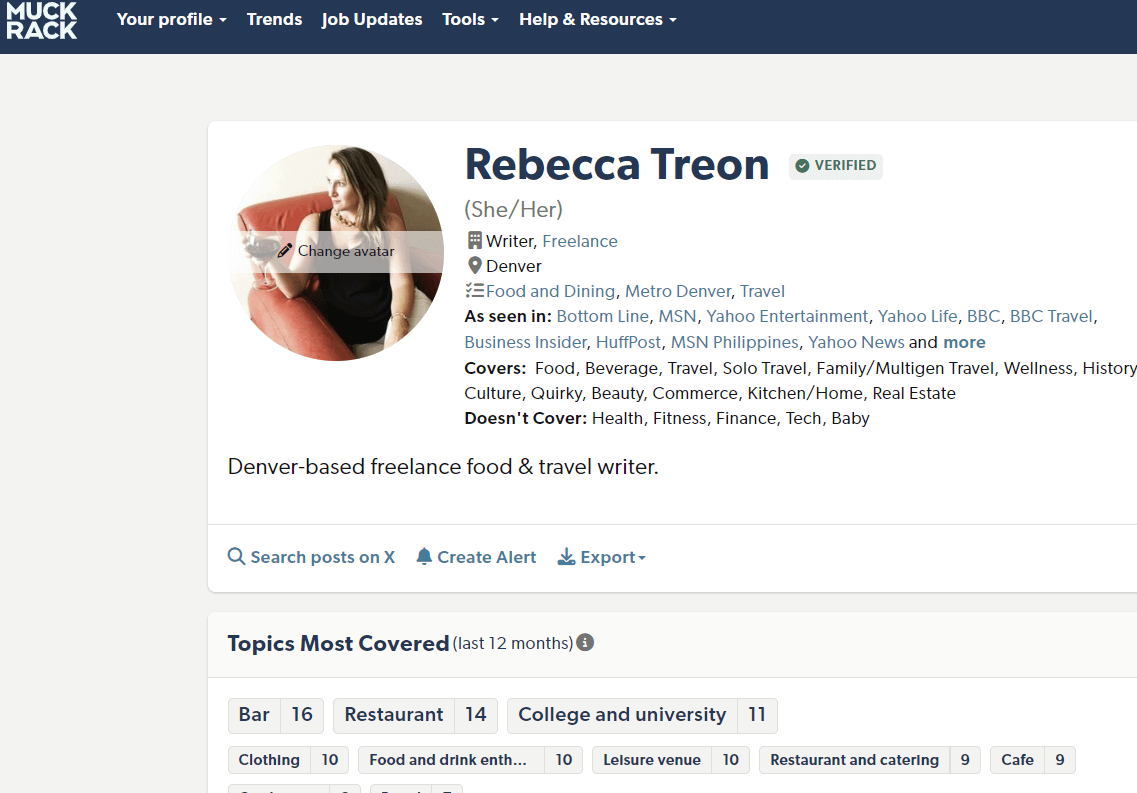
Muck Rack was created so that PR Professionals and Journalists could connect with each other. Using cloud-based software, Muck Rack automatically creates a profile where all of your work is catalogued and updates it as things publish. If you claim your profile as a journalist, you can add things to your profile like contact information and pin your selected stories at the top.
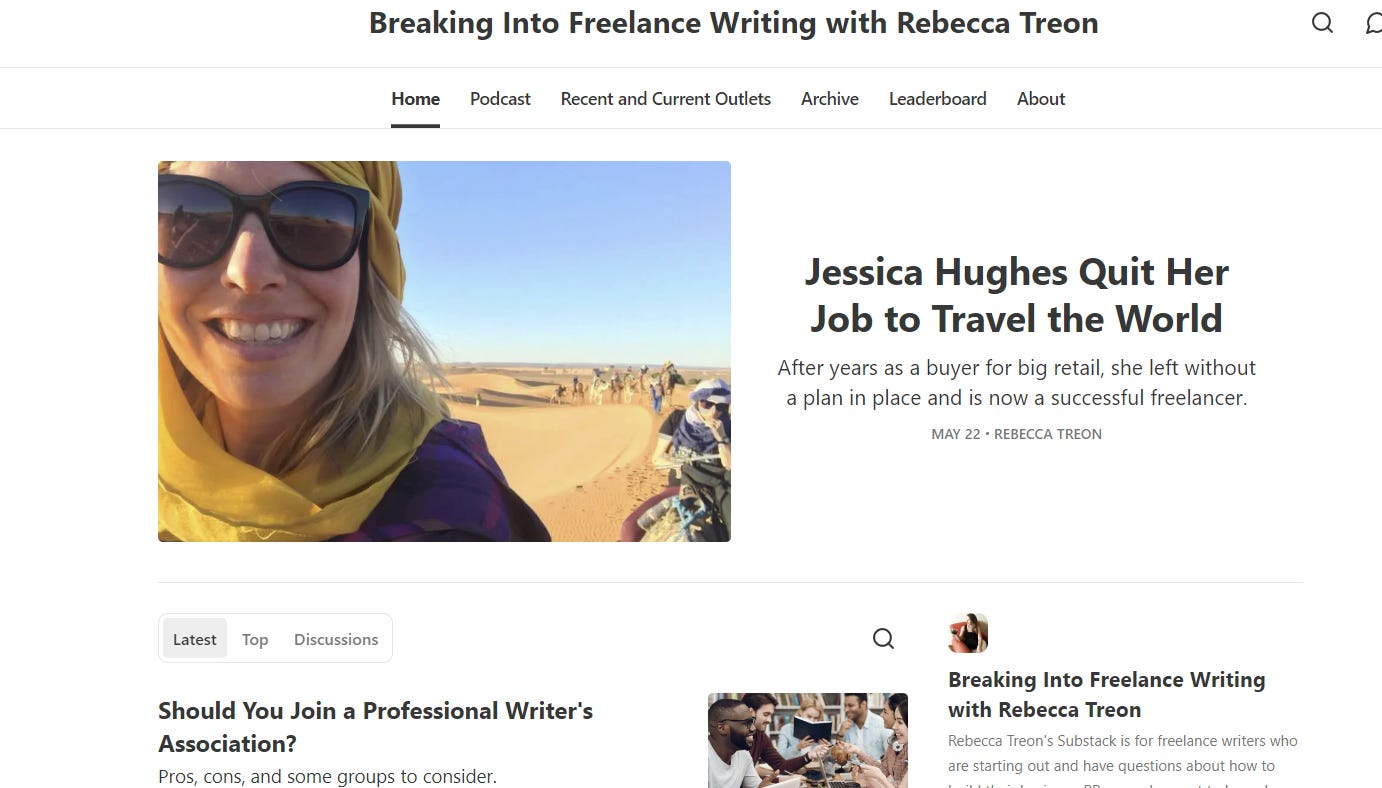
Substack’s format is like the landing page of a digital publication. When you post, it’s like creating a blog post but the outfacing view is a collection of “articles” with headlines. You could use this as a portfolio by uploading the hero shot of your article as the main image, the headline and maybe first few lines of the story or a summary and link to the story.
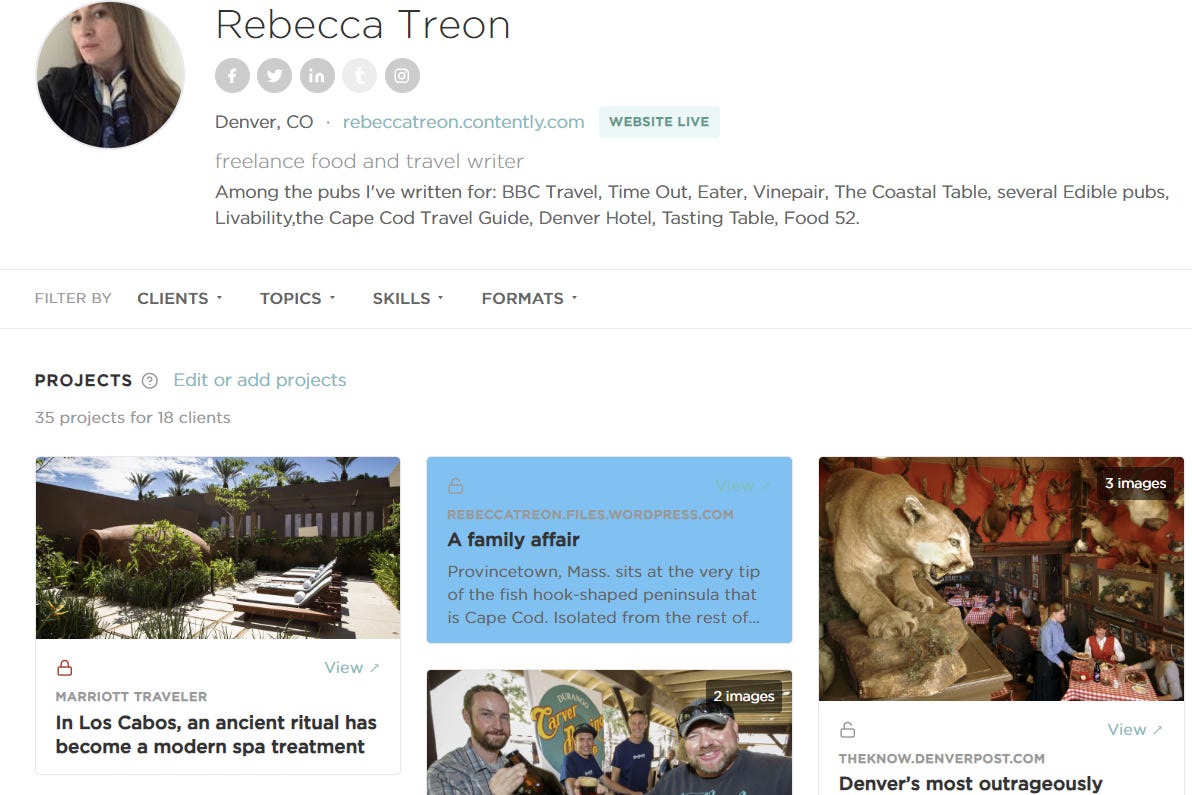
Contently is basically a place where you can upload your stories and it will link to them with a headline and photo. It lets you create a portfolio that matches your skills with their clients who have posted jobs or assignments. Full disclosure, I haven’t updated my profile in ages, but several years ago, this was a great way for me to find assignments like blog posts for outdoor gear brands and hotel chains.
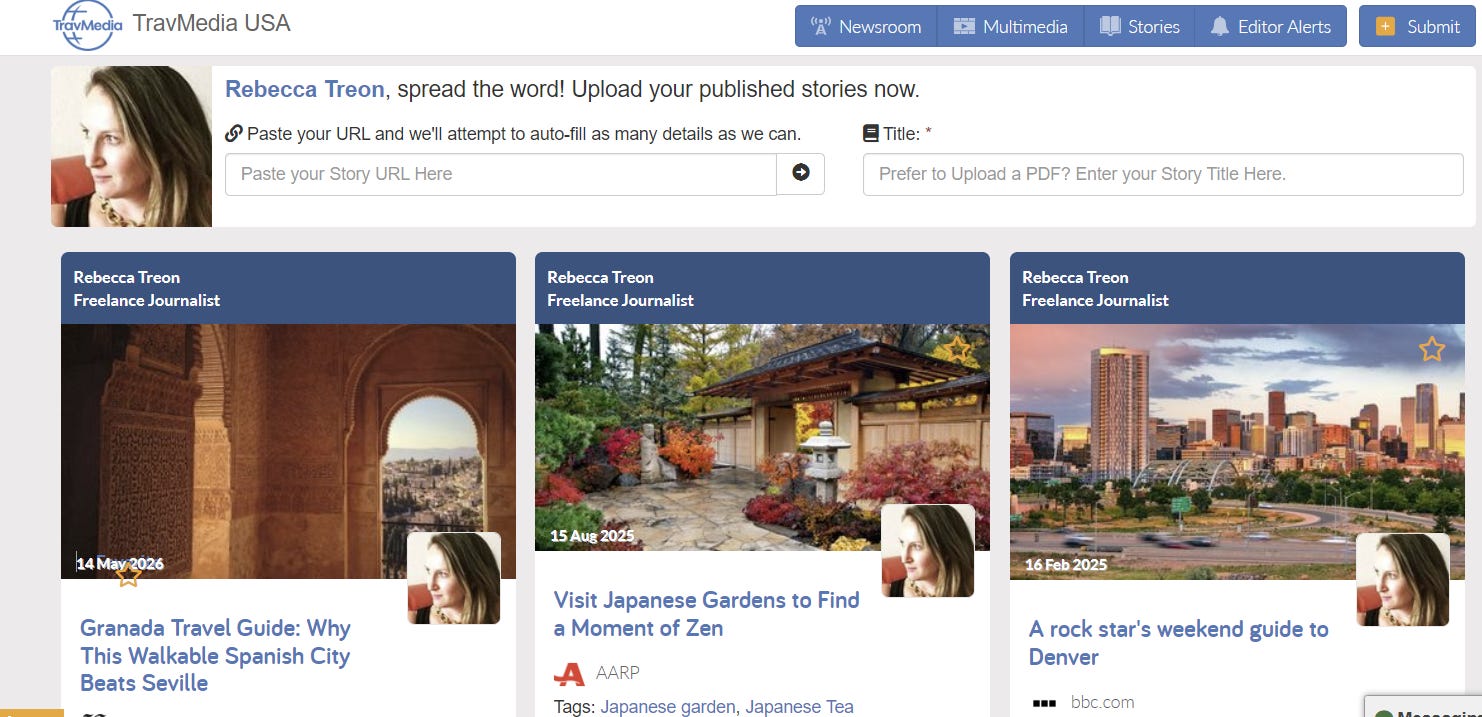
TravMedia is the company that puts on events like IMM (International Media Marketplace) and it uses its own platform to vet who gets invited. To get an invite you have to prove you have a track record of travel writing, so you create a profile and upload your stories as they’re published. The main page generally shows up as a feed with all the members but you can create a portfolio and when you click on your name, you get a catalogue of published stories like the photo above.
Here are some additional resources that I don’t personally use, but can be used to host your portfolio.
Authory automatically backs up your work with screenshots of your stories so you don’t have to fuss with making PDFs. Creates a self-updating portfolio. Provides analytics.
Journo Portfolio has a lot of great options for customization so you can create a beautiful site.
Medium functions a lot like Substack, you upload your content and the outward facing view is like a list of your posts/published work.